The team.
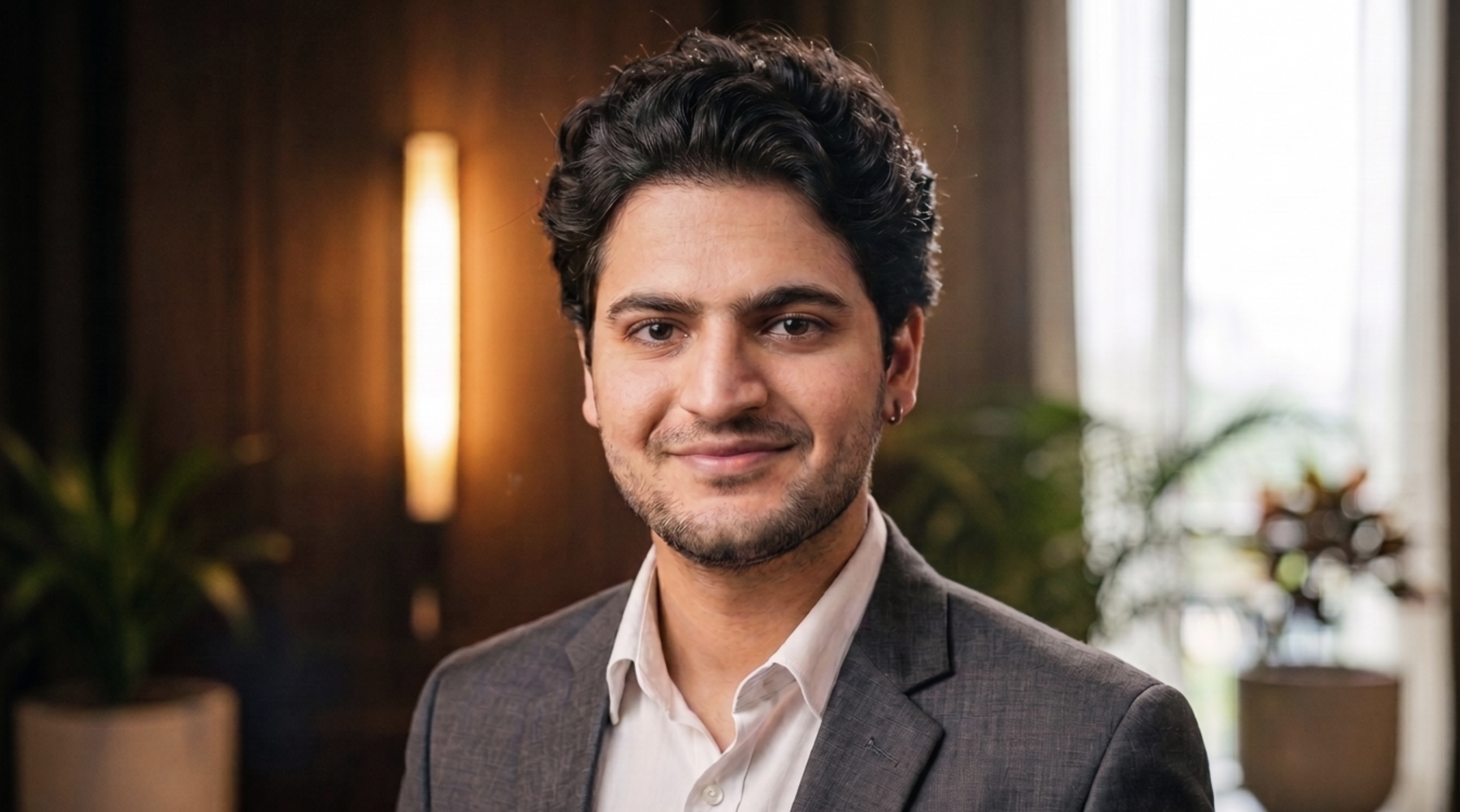
Aarnav grew up in India, where dust and pollution seasons made some days genuinely hard to breathe. That's where Nafas started, from wanting the tool he wished had existed back then. He built the first working version in about a week: a live dust map covering the Gulf, real access to Copernicus satellite data, and a number nobody else had published, how many ground stations actually cover the region. He also set up a daily archive that checks the forecasts against what the stations actually record. Across that first week, the archive tracked a real dust buildup over the UAE as it developed. Before Nafas, he built an AI debate-moderator system alone, from idea to working product. He still runs the technical side of Nafas by himself, on a near-zero budget, using AI tools to move fast across data, forecasting, and the product itself. As CTO, he owns the full stack — data pipelines, forecasting models, and the product itself — and keeps all of it moving without a team behind him.

Kunwar is finishing his BTech in Mechanical Engineering at SRM IST KTR, with a specialization in AI/ML. His younger brother has asthma, so he has seen firsthand what a bad air day actually costs a family, not just a number on a forecast. Nafas is his first venture, and he is fully dedicated to it, relocating to Abu Dhabi to build it from the ground up. As CEO, he owns the commercial engine — building the partnerships and customer relationships that put Nafas in the rooms where decisions get made.

Kartikay is finishing an M.Tech (Integrated) at SRM IST KTR, the same program Aarnav is in. He grew up in Delhi, where dust and pollution seasons are just part of the year, so the problem Nafas is solving isn't abstract to him. This is his first venture too, and he is fully dedicated to it, relocating to Abu Dhabi to work on it full time. As COO, he runs the operational backbone — the systems, structure, and ground-level decisions that turn a working product into a real company.
How it's built
Nafas is a decision layer on top of free, public satellite and ground data — not a hardware product. Forecasts come from Copernicus CAMS (via Open-Meteo), cross-checked against Sentinel-5P and OpenAQ / public ground stations where available. No hardware is owned or deployed.
A daily paired forecast/observation validation archive has been running since 4 July 2026, comparing predicted air quality against real station readings to measure accuracy honestly rather than assert it.
Roadmap
- Live today: 10-city, 48-hour plain-language advice layer, updated twice daily.
- Next: push alerts, so the advice reaches you before you have to check.
- Later: a Gulf-specific dust model, tuned on the validation archive rather than global defaults.